
✨ Claude Code is Revealing The Future of Pop Culture & Design
🌌 & even Anthropic might not be aware

There’s a strange realization that starts happening after running hundreds of visual experiments with LLM tools like Claude Code/Claude Design/Copilot:
The outputs stop feeling random.
✨ Patterns emerge.
✨ Preferences emerge.
✨ And eventually — taste emerges.
Over the past few weeks, I stress-tested Claude Code through hundreds of SVG generations across visual systems, abstract compositions, texture studies, and emotional design prompts.
What stood out wasn’t just output quality.
It was consistency.
Certain visual languages repeatedly surfaced better results across prompts, constraints, and experiments — almost as if the model compressed some aesthetics better than others.
And those aesthetics feel increasingly aligned with where internet pop design is heading next.
These are the 5 styles that stood out the most.
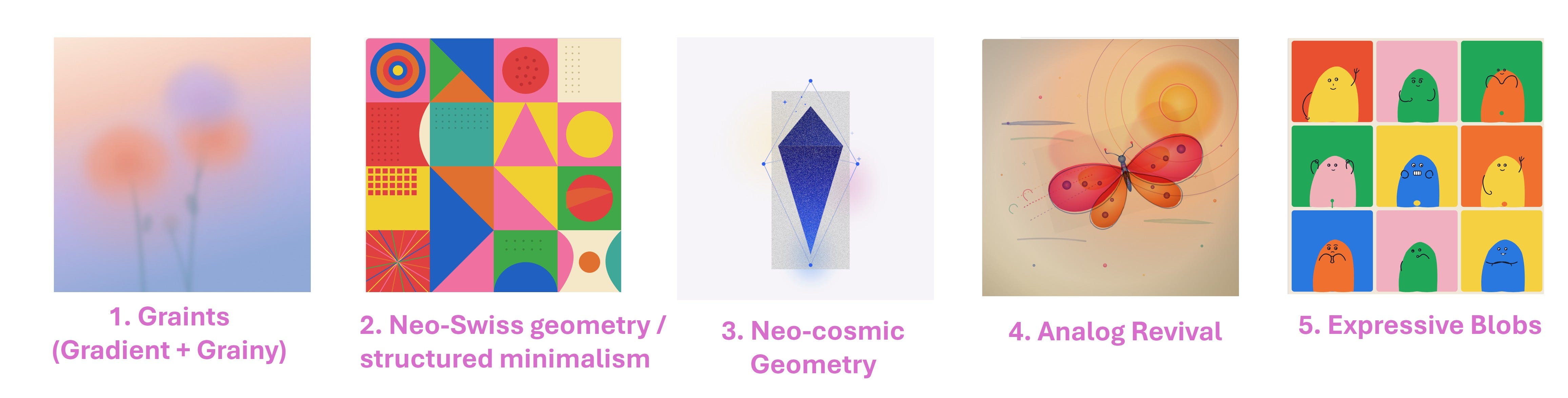
🌈 1. Graints
(Gradient + Grainy)
Soft atmospheric gradients combined with film grain, blur, diffusion, and textured light.
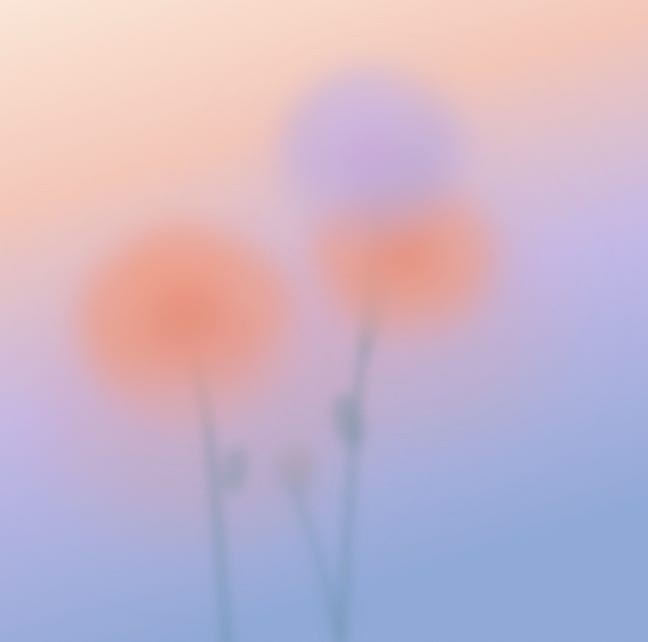
Claude repeatedly gravitates toward:
🌅 Aurora-like color transitions/ Aurora Blobs
🌫️ Dreamy blurred depth
💡 Ambient glow systems
🎞️ Grainy softness over sharp realism
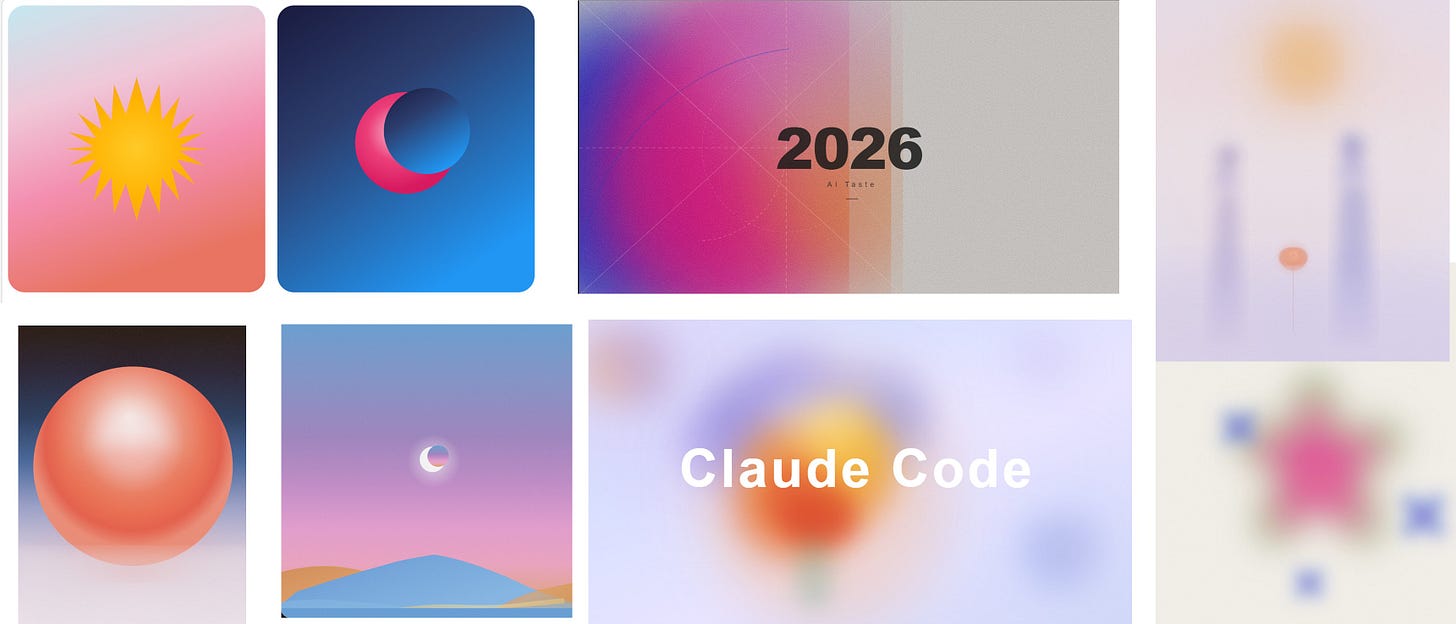
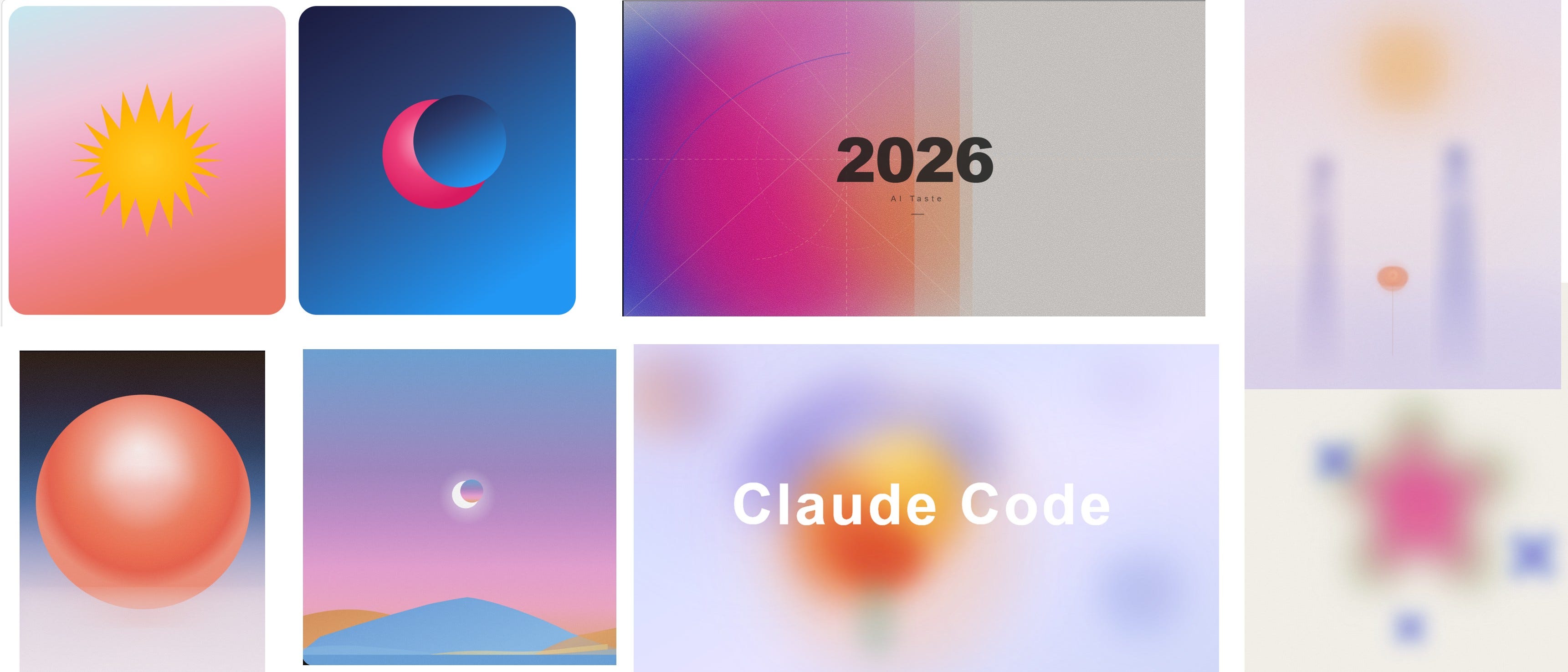
This builds on the soft atmospheric aesthetic enabled by SVG effects like feGaussianBlur, which many emerging AI taste systems are increasingly gravitating toward.
The grainy softness introduces emotional texture into digital artifacts, extending beyond visuals into interfaces, storytelling, and even data narratives.
The result feels emotionally calming, nostalgic, and highly digital-native.

Not just corporate minimalism.
More like:
✨ “Mood-first interfaces.”
This aesthetic is increasingly common across:
🤖 AI startups
🎵 Music visuals
🧃 Gen Z branding
🧪 Experimental UI systems
Softness is replacing sharpness as a dominant digital aesthetic.
📐 2. Bauhaus Grid / Neo-Swiss Geometry / Structured Minimalism
This was one of the strongest recurring patterns.
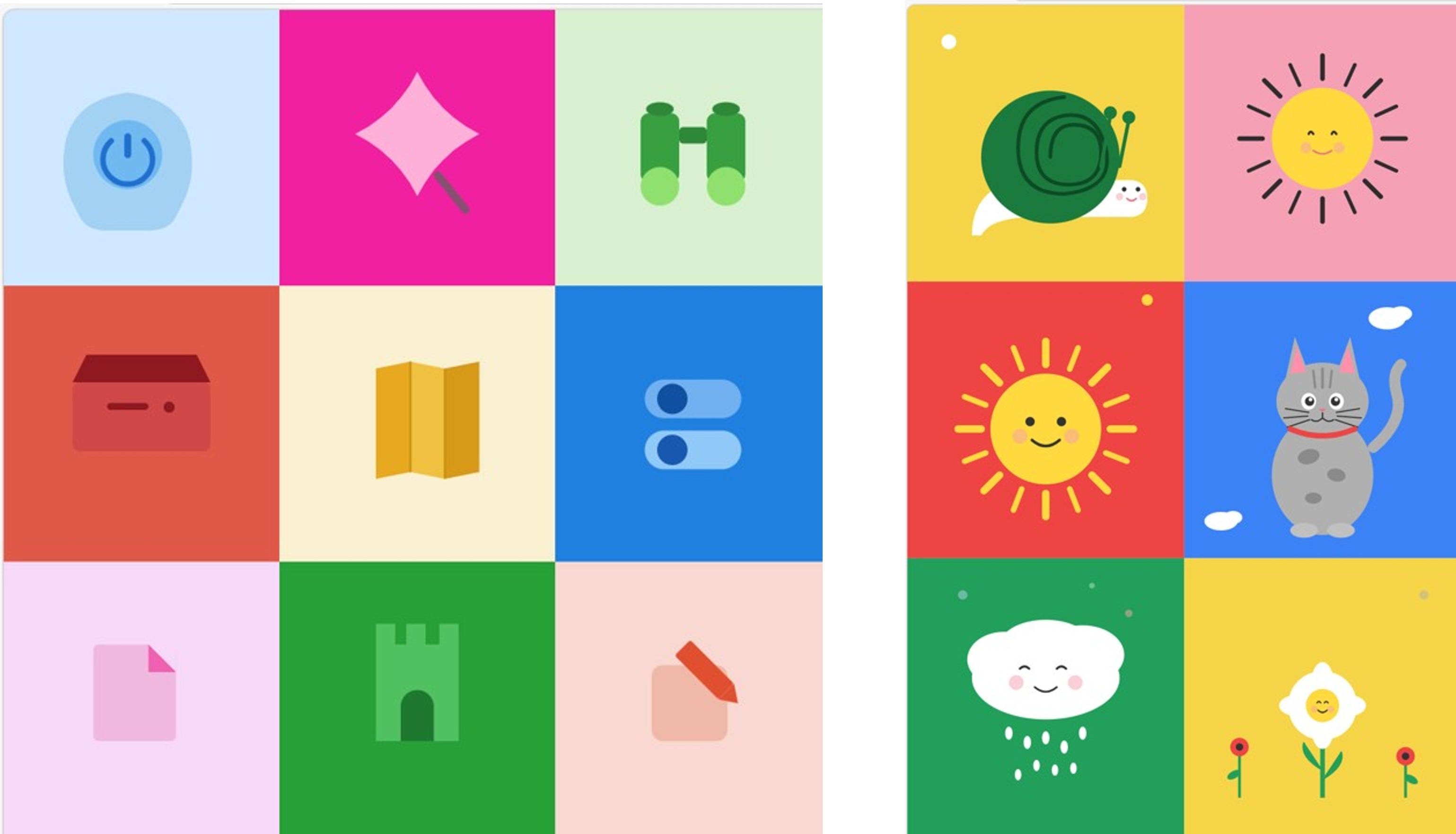
Claude is exceptionally good at:
📏 Grid systems
🧩 Modular layouts
🔷 Geometric balance
🔤 Typographic hierarchy
⬜ Structured whitespace
The outputs feel heavily influenced by:
🏛️ Bauhaus principles
🇨🇭 Swiss design systems
📰 Modern editorial layouts
⚙️ Generative design frameworks
More importantly, this style works extremely well in SVG logic.
Meaning:
♾️ scalable
🎛️ parameterized
🔁 repeatable
🏗️ system-friendly
This isn’t just visual design anymore.
It’s programmable aesthetics.
🖨️ 3. Analog Revival
(Halftone, ASCII, Risograph, Ink Wash)
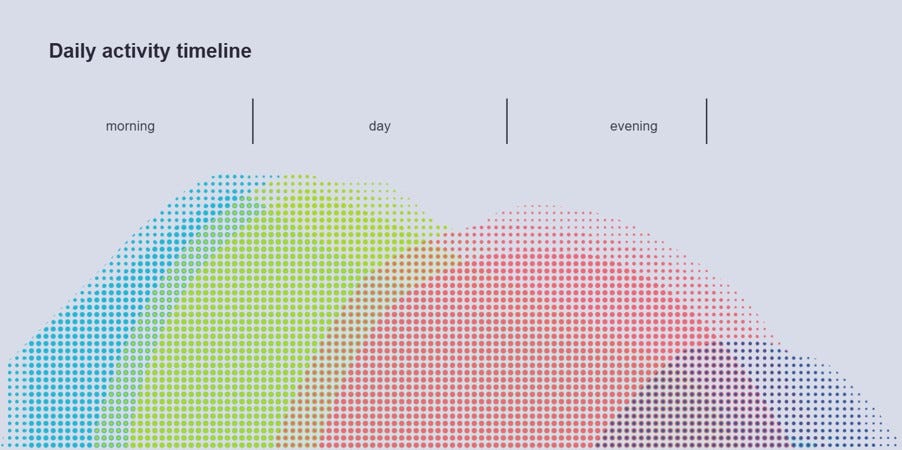
One of the most surprising patterns:
Despite being an AI-native system, Claude consistently recreates analog imperfections.
It generates:
⚫ Halftone textures
💻 ASCII-inspired rendering
🎨 Risograph-style layering
🖌️ Ink bleed aesthetics
🌪️ Noise and dithering systems
Almost as if digital systems are nostalgically reconstructing physical media.
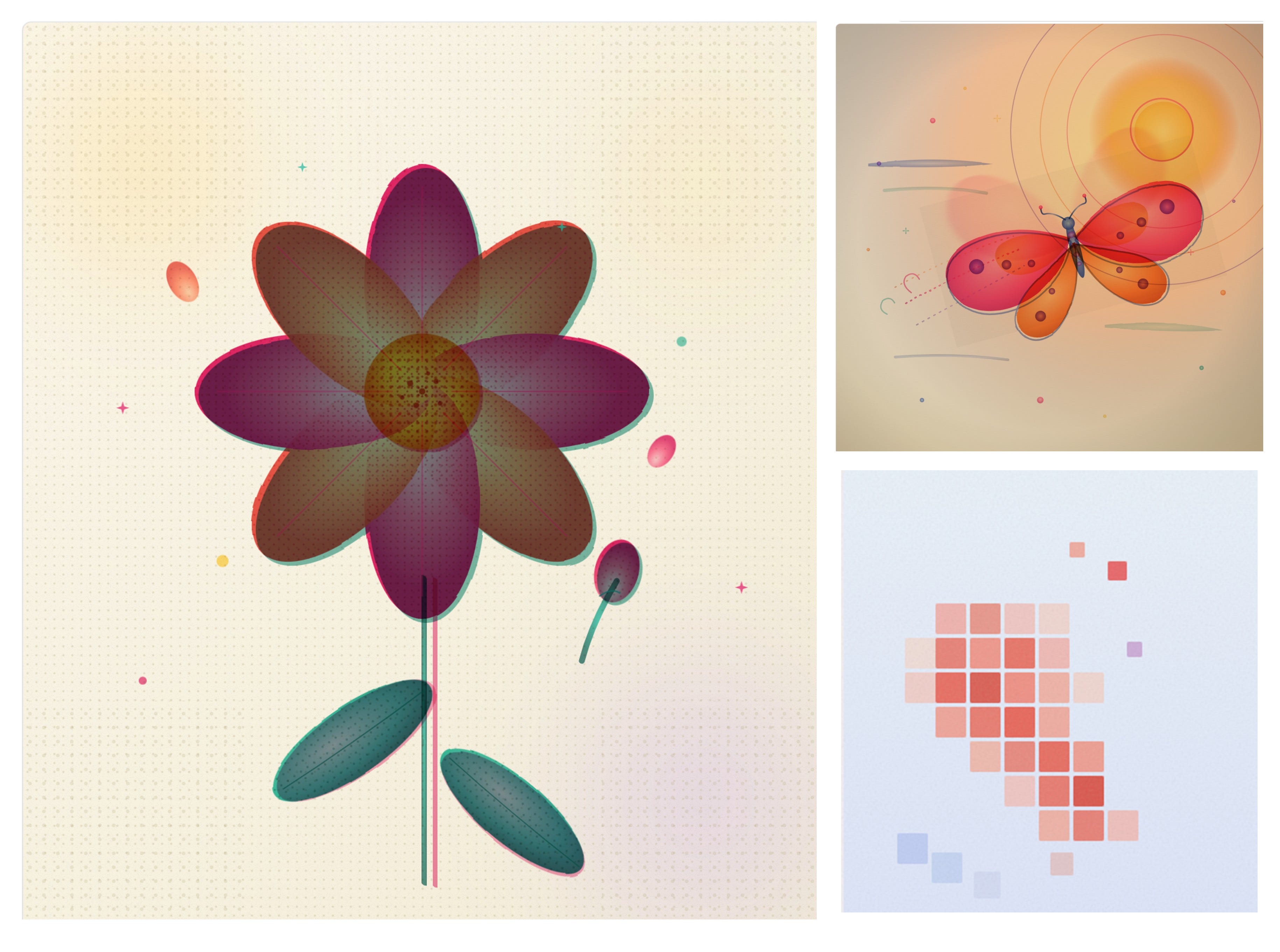
This creates an interesting tension:
⚡ Perfect systems generating imperfect aesthetics.
The result feels tactile, human, and emotionally warmer than ultra-clean AI visuals.
Synthetic analog is becoming a major design language.
🔮 4. Neo-Cosmic Grid
This cluster felt especially unique.
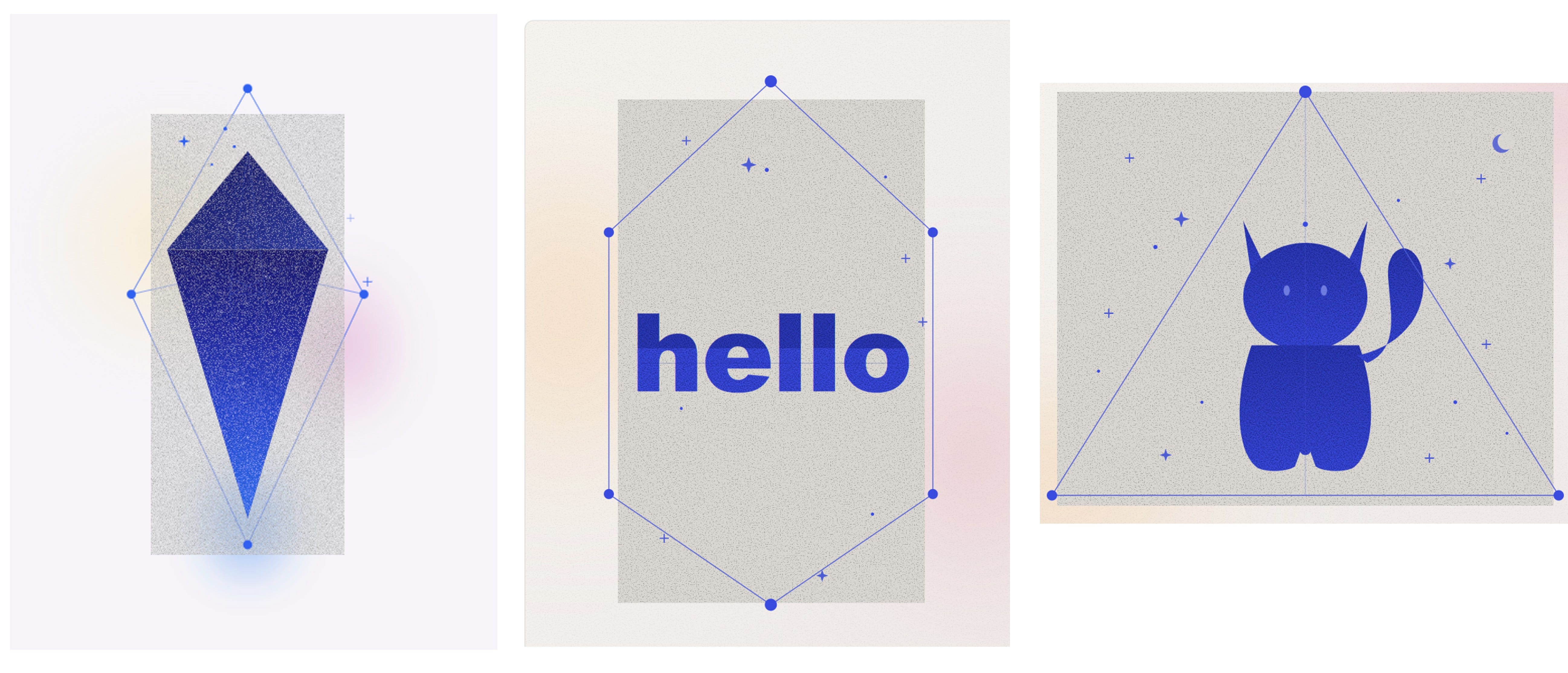
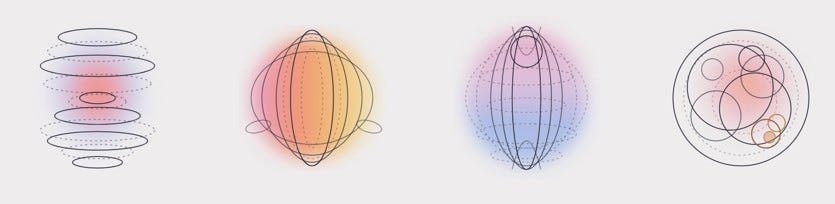
Claude repeatedly produced visuals involving:
🌌 Celestial geometry
🌈 Prism dispersion
☀️ Radial systems
💎 Crystal wireframes
✡️ Sacred geometric structures
🪐 Cosmic symmetry
The aesthetic sits somewhere between:
🚀 futurism
🔮 mysticism
🧠 startup branding
🌀 symbolic geometry
Not traditional sci-fi.
Something softer and more spiritual.
It feels like:
✨ “Data visualization meets mythology.”
This style is powerful because it carries meaning beyond decoration.
It feels:
🧬 identity-oriented
🛐 belief-oriented
🌍 culture-oriented
🫧 5. Expressive Blobs
Simple organic forms turned out to be surprisingly fun.
Claude consistently generates:
😊 Blob-based characters
🌊 Fluid organic geometry
🎭 Emotional silhouettes
🫶 Rounded expressive systems
☁️ Soft asymmetry
What makes this important is scalability.
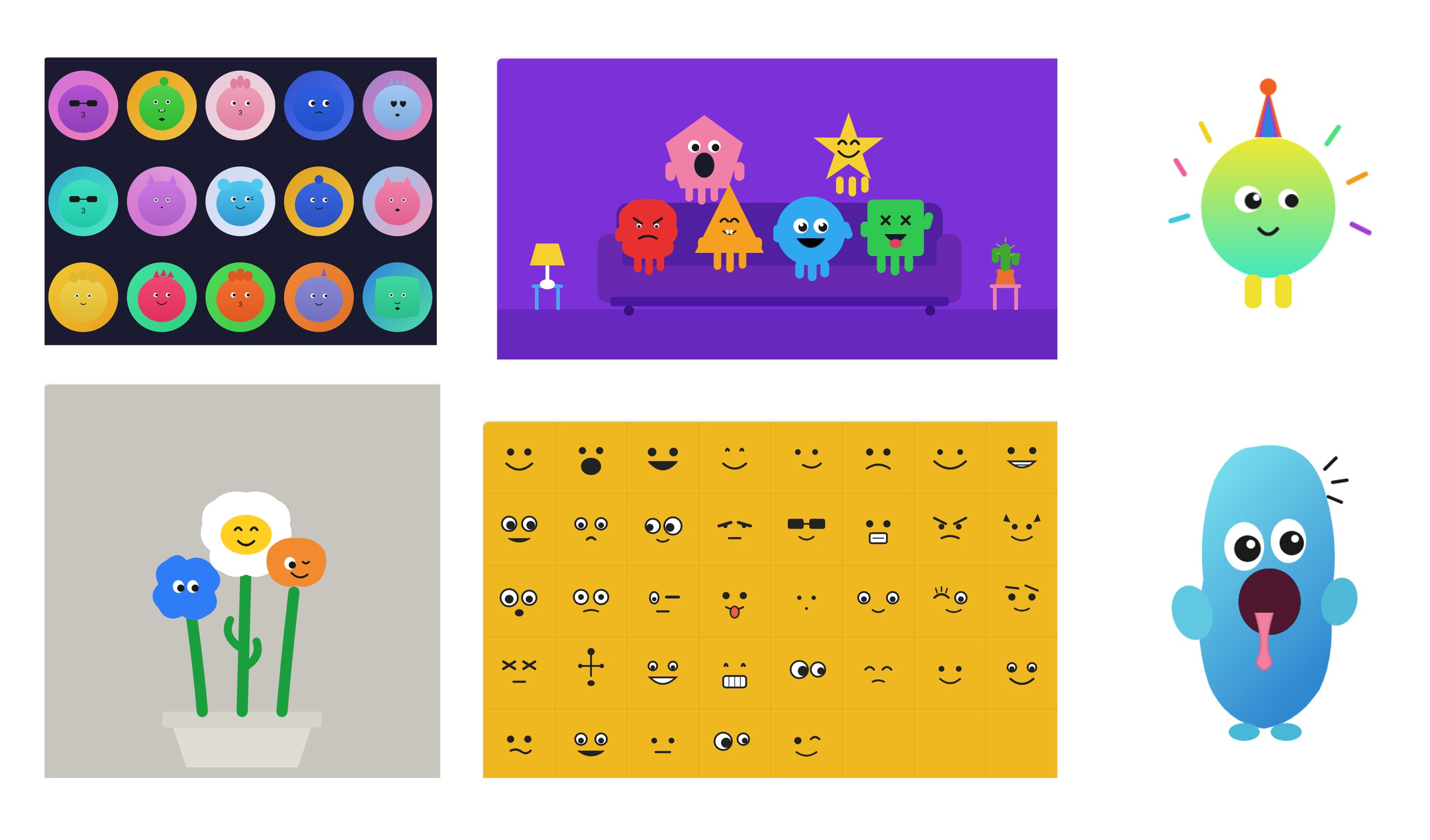
These forms work especially well for:
👤 avatars
💬 stickers
🤖 AI companions
🐣 brand mascots
❤️ emotion systems
🚪 onboarding experiences
They’re simple enough to generate infinitely, yet expressive enough to feel emotionally alive.
And that combination matters.
Because scalable emotion is becoming a core primitive of AI-native products.
🧠 The Bigger Pattern
Across all 5 styles, a deeper trend becomes visible.
LLM tools like Claude Code appear strongest when design can be expressed through:
⚙️ systems
🧱 layers
🎛️ parameters
🔁 controlled variation
🧩 repeatable structure
Not hyper-realistic complexity.
Not handcrafted irregularity.
The styles that scale best through AI systems may ultimately become the styles that dominate digital culture.
And historically, culture has always followed what scales:
📰 printing technology shaped posters
🖼️ Photoshop shaped digital aesthetics
📱 smartphones shaped Instagram culture
Now:
🤖 AI-generated SVG systems may shape the next era of pop design.
👀 So… Is Anthropic Aware?
Hard to say.
I suspect this pattern also extends beyond Claude and applies to many modern LLM-based creative systems.
But most conversations around AI visuals today focus on reproducing existing aesthetics.
What feels more interesting to me is identifying the emerging patterns hiding underneath the outputs themselves.
Personally, this experiment helped me notice styles like:
🌌 neo-cosmic grids
🌈 graints
📐 neo-swiss systems
— themes I probably would have overlooked otherwise.
That’s what made this worth sharing.
Because once millions of creators begin building with similar aesthetic tendencies, those tendencies inevitably could begin influencing next generation culture itself.
🤫 Quietly.
📈 Gradually.
🌍 At scale.
✨ Closing Thought
The most important question may no longer be:
🤔 “What can AI create?”
But instead:
🎨 “Which taste does AI naturally amplify?”
Because somewhere inside that answer lies the future of internet design culture.
And tools like Claude Code might already be revealing it — before most of us fully notice it.